Loveday Ryder resignation
Loveday Ryder resignation : Why Loveday Ryder’s leadership at DVSA is under fire
Stay informed with HSA automotive news
Get clear updates on dvsa changes, learner driver tips, test routes, safety alerts, and unbiased car guidance. New stories are added regularly to help you plan smarter and drive with confidence.
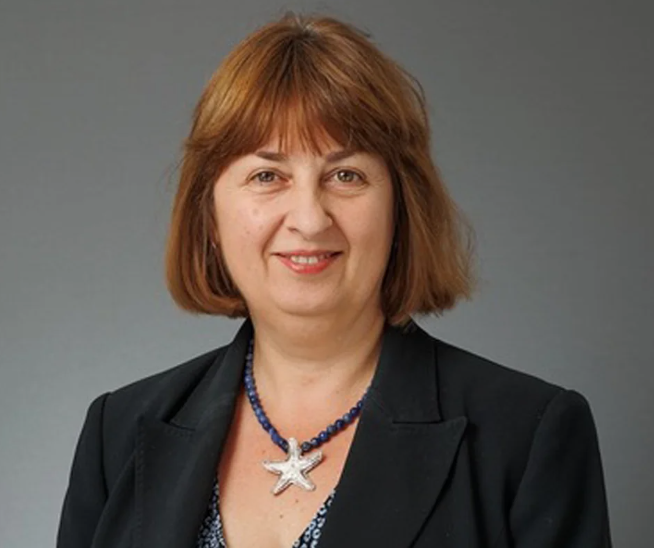
Read more on HSA automotive news → Every story is written for real learners and instructors across London.Loveday Ryder became Chief Executive of the Driver and Vehicle Standards Agency (DVSA) on 1 January 2021. (GOV.UK)
Prior to this role, she was Chief Executive of BPDTS Ltd from January 2018 until December 2020.
Civil Service World,Companies House
Before joining the Civil Service in 2006, she worked in management consultancy delivering business change, performance improvement and IT programmes in both public and private sectors.
In the Ministry of Justice she held a number of senior roles over about twelve years, specialising in organisational design, change management and programme delivery.
In her announcement of her DVSA appointment, the Department for Transport stated that her “wide range of business change and performance improvement experience will be invaluable in helping DVSA overcome the operational challenges created by the coronavirus pandemic.”
Her appointment at DVSA was framed in the context of the pandemic-era testing backlog and service disruption.
Thus, in summary, her career path is:
Management consultancy (pre-2006)
Civil Service (Ministry of Justice) for ~12 years (2006 onward)
CEO of BPDTS Ltd (2018–2020) CEO of DVSA (January 2021 onward)
Role and Responsibilities at DVSA
As Chief Executive of the DVSA, Ryder is responsible for overall management of the agency, covering operations and enforcement; digital services and technology; people, communications and engagement; finance and corporate services; policy, strategy, planning and performance.
The DVSA is the UK executive agency under the Department for Transport which carries out driving tests, approves driving instructors and MOT testers, conducts roadside vehicle and driver checks, and monitors vehicle recalls.
Given that driving test waiting times, examiner recruitment and retention, and system performance have become major issues for the DVSA, Ryder’s leadership has come under increased scrutiny in respect of how the agency handles these challenges.
The Testing Chaos and Waiting Time Crisis
One of the major issues during Ryder’s tenure has been the severe backlog and long waiting times for practical driving tests. For example, a July 2025 article in The Spectator reported that the average waiting time for a practical car driving test was 22 weeks across the UK, with London waiting times of about 24 weeks — far longer than the DVSA target of seven weeks.
In a parliamentary document titled Measures to tackle car practical driving test waiting times (February 2025) the DVSA reported that in the recruitment of driving examiners since July 2024: of 225 recruits who started training, 116 completed training and are now delivering tests; 46 either failed or resigned; 63 were still in training. It also noted that retention and recruitment in hotspot areas (such as London and the South East) remains a challenge. UK Parliament Committees
Front-line commentary has also accused the DVSA under Ryder of failing to manage basic booking systems, of high examiner attrition, and of ignored warning signs from instructors and driving schools. One open letter by the driving instructors’ group AADI stated:
“My pupils are having difficulty getting tests … this costs them money taking lessons to keep ‘hot’. … It is fair to say WHEN things will get better … given the last two decades has been an absolute disaster, with headless chickens running the roost. … Loveday Ryder holds full responsibility…” AADI
These problems have placed scrutiny on Ryder’s leadership: the backlog and service performance continue despite her having been in post since early 2021.
Factors Contributing to the Crisis
Several systemic and organisational factors have contributed to the testing delays and service issues under her leadership:
Examiner recruitment & retention challenges: As the parliamentary document notes, recruiting and retaining driving examiners is difficult, particularly in areas with strong private-sector competition for labour. UK Parliament Committees
Legacy booking/technology systems: The DVSA has acknowledged that its practical-test booking system is a legacy platform, and it is working on a transformation (Drivers Services Platform) to modernise. UK Parliament CommitteesPandemic disruptions and backlog accumulation: The appointment of Ryder came amid the COVID-19 pandemic, when tests were cancelled or delayed, adding a backlog burden to her incoming leadership. Civil Service World+1
Customer dissatisfaction, trust erosion: The open letter from the AADI highlights how learner drivers and instructors feel the system is failing them, and that trust in DVSA’s promises is low.
Performance expectations vs operational reality:
Media commentary notes that while the DVSA leadership praised progress and wellbeing initiatives, the tangible service metrics (waiting times) worsened.
Why Resignation Would Be Considered (or Why It May Be Taking Place)
Although I did not find a formal published announcement of Loveday Ryder having resigned as of this writing (November 2025), press commentary and sector critique make the case that there is mounting pressure on her role for the following reasons:
The failure to reduce waiting times to acceptable levels (the target of ~7 weeks appears far off). The visible disconnect between executive commentary (e.g., celebration of ‘progress’) and operational reality (worsening service metrics).Perceived leadership accountability: As CEO, Ryder is the figure head for the agency’s successes or failures. The AADI letter explicitly places responsibility for test-booking chaos directly with Ryder. AADI The ongoing challenge of delivering on digital transformation, examiner recruitment, and service remediation under her stewardship, with delays and partial progress. Media comment, such as in The Spectator, pointing out Ryder’s remuneration uplift and pension gain at a time when service performance is reportedly declining.
If she were to resign, those would likely be the contributing factors: accountability for performance, logistical challenges, stakeholder dissatisfaction, and internal or external pressure to bring in new leadership.
Implications for the Driving-Test Industry and Learner Drivers
Learner drivers face long waits, which can impact job opportunities, education, relocation, and personal planning.
Driving instructors and schools feel the pressure of pupils having delayed test slots, incurring extra costs for continued lessons, and losing momentum.
The drive-training industry is frustrated by perceived under-performance of the DVSA booking/operational system, and by what they view as insufficient response or transparency.
The appointment backlog can erode public trust in the agency, and potentially shift pressure onto the private sector or alternative service models.
A leadership change at the DVSA could signal a reset or accelerated reform of the agency’s processes, technology and customer service orientation.
Challenges and Outlook
Even with a new CEO (if there is one), structural issues such as legacy systems, workforce recruitment, and funding remain significant.
Digital transformation of booking systems is complex and time-consuming; the DVSA’s own business-case documentation indicates this. UK Parliament Committees
Retention of examiners remains a weak spot, particularly in high-demand regions and given competition for skilled workers.
Public and sector confidence recovery may take time, especially given the depth of the backlog and negative sentiment expressed by instructors and learners alike.
Strategic focus may shift to regional variation (hot-spot areas like London), prioritising high-demand centres, and to improving customer transparency.
Stay informed with HSA automotive news
Get clear updates on dvsa changes, learner driver tips, test routes, safety alerts, and unbiased car guidance. New stories are added regularly to help you plan smarter and drive with confidence.
Read more on HSA automotive news → Every story is written for real learners and instructors across London.Lordicon
Powerful animated icon library