Automatic Driving Lessons
Automatic Driving Lessons London

Add Your Heading Text Here
Automatic Driving Lessons in London with HSA
Automatic driving lessons in London help learners focus on observation, positioning, and hazard perception without the distraction of gears. This allows faster confidence building on real test routes across London and Barnet.
More reasons to choose automatic driving lessons in London
Comfort in every drive
Automatic vehicles are well suited to learners who prefer a smoother, lower-stress experience. In London’s transport network, not managing clutch control reduces workload and allows greater focus on observation and hazard awareness.
Designed for city conditions
Stop-start traffic, frequent junctions, and roundabouts make London demanding for learners. Automatic transmissions simplify vehicle control, giving more time to plan and make safe decisions. See urban driving guidance.
Modern vehicle assistance features
Many automatic cars include hill-start assist, reversing cameras, and emergency braking support. These reflect wider trends covered in automotive technology updates.
Potentially quicker progress for some learners
With fewer controls to coordinate, some learners progress more efficiently in an automatic, depending on consistency and practice. Further details are available on HSA’s automatic lessons page.
Practical for modern driving roles
Many professional driving roles now accept automatic licences, particularly where vehicles are automatic-only. Opportunities can be explored via Find a Job (GOV.UK) or Indeed UK.
Aligned with the electric vehicle future
Electric vehicles are automatic by default, and the UK is moving toward zero-emission transport. Official information is available via GOV.UK’s zero-emission vehicle transition update .
Automatic Driving Lessons London
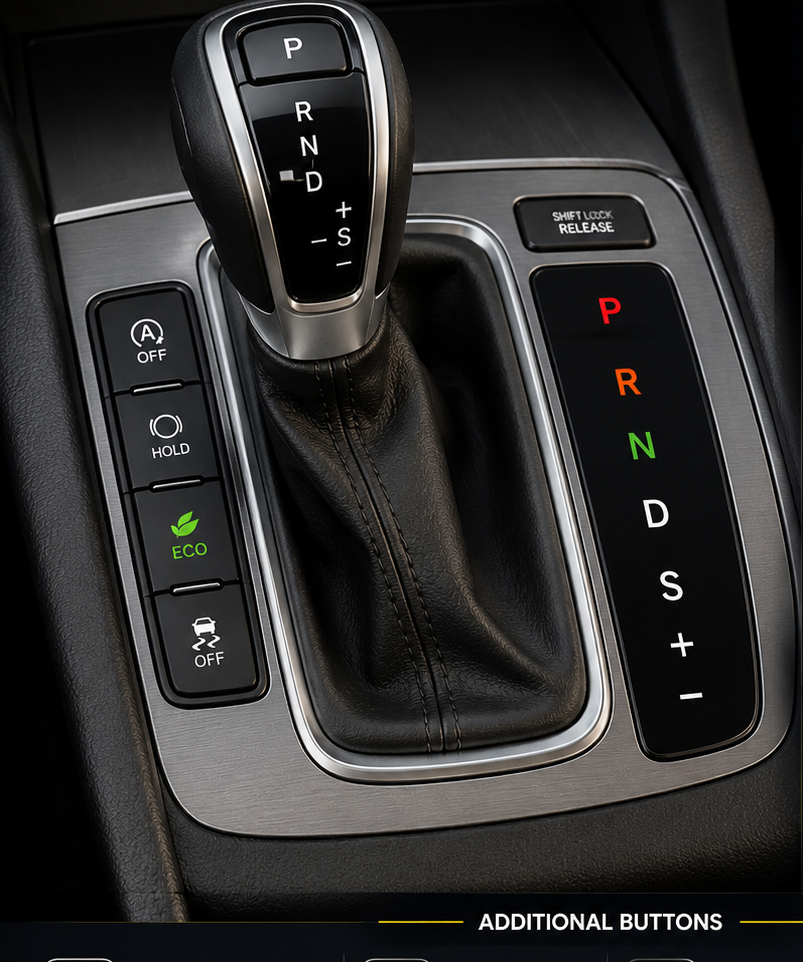
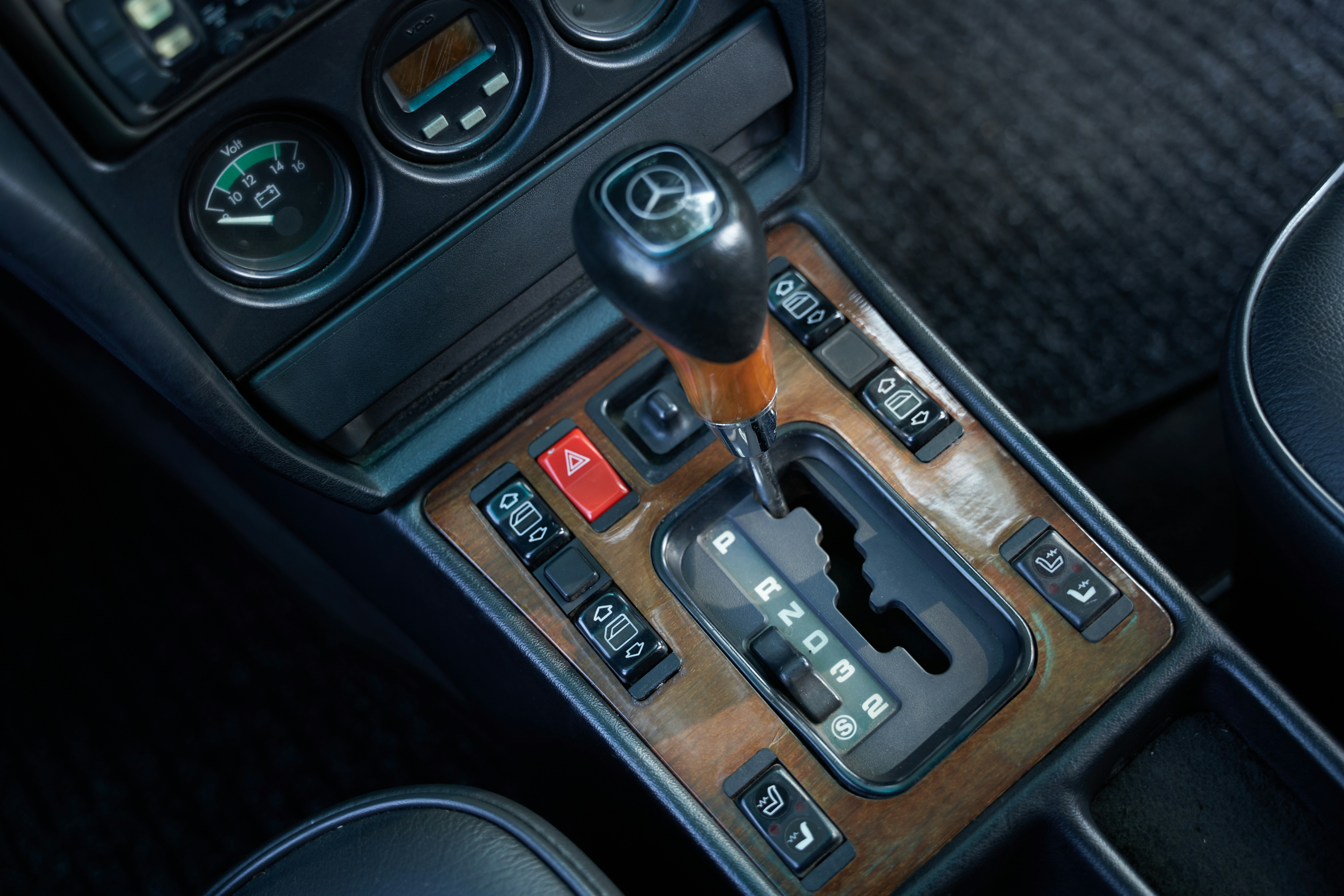
How an Automatic Gearbox Works + What P / R / N / D (and more) Mean
Automatics choose the right gear for you and connect engine power to the wheels smoothly. Below is a simple, visual guide you can skim in minutes and feel smarter instantly.
How it works (classic hydraulic automatic)
- 1Torque Converter – a fluid coupling between engine and gearbox. It uses a pump (engine side) and a turbine (gearbox side) to transmit torque smoothly, allowing the car to stop without stalling.
- 2Planetary Gearsets – compact gear sets that produce multiple ratios (1st, 2nd, 3rd… and reverse). Clutches/bands lock parts of the gearset to select each ratio.
- 3Valve Body / Mechatronics – a hydraulic “brain” controlled by the TCU (Transmission Control Unit). It directs fluid pressure to engage the correct clutches based on speed, throttle, and load.
- 4Lock-Up Clutch – at cruise, it locks the torque converter to improve fuel economy and reduce heat.
Result: seamless pull-away, automatic up/down shifts, and smooth creep at low speed for parking.
Other “automatic” types you’ll meet
- DCT / DSG Dual-clutch: two clutches (odd/even gears) shift lightning-fast. Feels sporty.
- CVT Continuously Variable: belt/chain and cones for infinite ratios; the engine stays in its sweet spot. Often includes a B mode for engine-braking.
- eCVT (Hybrids) Power-split: blends engine + electric motor; no fixed “gears”. Uses regen for braking feel.
- EV Single-speed: electric motors have huge torque; usually one reduction gear and strong regenerative braking.
Gear selector letters & when to use them
P Park
Locks the output shaft. Use only when stopped. Engage the parking brake first on inclines to reduce strain.
R Reverse
Select only when fully stopped. Check mirrors, surroundings, and go slowly.
N Neutral
Disconnects drive. Rarely needed; use briefly in car-wash or if instructed. Not for coasting.
D Drive
Normal forward mode. The transmission chooses gears for economy and smoothness.
S / Sport Sport/Performance
Holds lower gears longer for stronger acceleration and engine-braking.
L / 1 / 2 Low gears
Limits to lower ratios for hills, towing, or extra engine-braking.
B Brake (CVT/Hybrid/EV)
Increases engine/regenerative braking on descents—saves brakes and improves control.
M / ± Manual mode
Use paddles or the lever to choose gears yourself (the TCU still prevents engine damage).
Snow / Eco Drive programs
Tames throttle or starts in higher gear for traction and efficiency.
Safety interlocks: You must press the brake to shift from P or N. Some cars have a “shift-lock release” to override when the battery is flat—see your handbook.
Smooth driving tips (learner-friendly)
- Right foot does it all: heel on the floor, roll between brake and accelerator.
- Let the car “creep” for parking control. Add tiny throttle only if needed.
- On long descents, use L or B for engine/regen braking—don’t ride the brakes.
- Pause in D with foot brake at lights; use P + parking brake for long waits.
Avoid these common mistakes
- Shifting to P while rolling (can damage the parking pawl).
- Selecting R before a full stop.
- Coasting in N downhill—reduces control and engine/regen braking.
- Covering both pedals (risk of brake/accel overlap). Use the right foot only.
Learn automatics the confident way in Colindale
HSA Driving School has 15+ years of experience in Colindale (NW9) teaching smooth, safe automatic control—parking, hill starts, roundabouts, and busy A5/A406 routes. Train on local test roads with DVSA-approved instructors and turn no licence into no limits.